
LIGHT be thy Medicine!
By Avo Garboushian ·
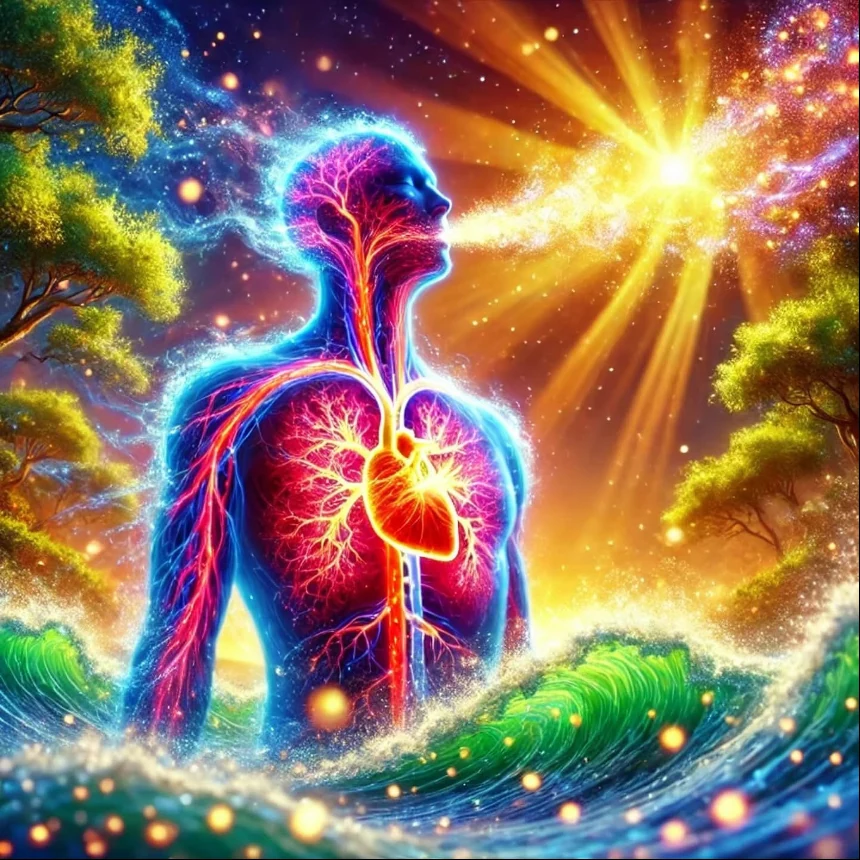
“You are the Light! Look within and discover the light of your soul.”
Avo Garboushian
Sunlight is one of the most natural and essential parts of life, and it is woven into our health in ways most of us were never taught. It helps regulate melatonin and cortisol, supports the production of serotonin, and plays a role in our sleep, mood, focus, blood sugar, and other processes throughout the body. It is also what allows our bodies to produce vitamin D, which supports immune function and calcium balance.
Sunlight is built into our biology and it sets the daily rhythm that our whole body follows. Here is how it supports each part of our health:
- Melatonin and cortisol. Light entering the eyes sets the body's master clock, and that clock times the morning rise of cortisol that wakes us and the evening rise of melatonin that prepares us for sleep.
- Serotonin. The more bright light the eyes receive during the day, the more serotonin the brain makes. After dark, that serotonin becomes melatonin, so daytime light feeds nighttime sleep.
- Blood sugar and insulin sensitivity. The master clock also times how the body handles sugar and responds to insulin, and it depends on daily light to stay in step.
- Leptin and ghrelin. Light reaches the part of the brain that manages hunger and fullness, so well-timed light helps keep leptin and ghrelin, the hormones that tell us when we are full and when we are hungry, in rhythm.
- Vitamin D. When UVB rays strike the skin, they turn a molecule in the skin into pre-vitamin D3, the first step in making vitamin D.
- Immune system and calcium balance. Vitamin D arms immune cells against bacteria and viruses, and it lifts the share of dietary calcium the gut absorbs from about 10 or 15 percent to as much as 30 to 40 percent.
- Hormone signaling. Vitamin D acts as a hormone, switching more than two hundred genes on and off, while the master clock keeps the rest of our hormones on schedule.
- Dopamine, mood and focus. Daytime light lifts serotonin and sharpens alertness, and Dr. Jack Kruse links natural light, and the right light at the right time, to healthy dopamine, the chemical of drive and focus.
- Blood pressure. UVA rays release nitric oxide stored in the skin. It widens the blood vessels and lowers blood pressure.
- Healthy skin. Sunlight lets the skin make vitamin D and melanin, the pigment that shields the DNA in our skin cells.
- Deep, restful sleep. Bright days and dark nights give the clock a strong, clear rhythm, and a strong rhythm gives us deeper sleep.
- Mitochondria. Light reaches the mitochondria, the tiny engines inside every cell, and tells them the time of day. Dr. Kruse teaches that ultraviolet A and near-infrared light help the body make new mitochondria, which brings vibrant health and abundance to every system of the body.
Every day the sun gives us changing patterns of light, and each pattern carries a message. Morning light, midday light, the gold of late afternoon and the darkness of night all tell the body what time it is and what it needs to do next. Light is information. The light entering our eyes tells the brain's internal clock when to wake us and when to let us sleep. The light reaching our skin lets us make vitamin D. And sunlight reaches the mitochondria in our cells, informing them of the time of day and what is needed.
Yet in our modern living spaces, many of us spend most of our time indoors and get far less natural light than we need. When we do not get enough sunlight, and spend our days and evenings under artificial lighting that does not match the light our bodies evolved with, the messages get scrambled. Bright light in the evening, especially the blue light from our screens and LED bulbs, tells the body that it is still daytime. This is why blue light blocking glasses make sense later in the day, whenever we are looking at a screen or sitting under LED lights. They block the blue signal before it reaches the eyes, so that our melatonin and the melanocortin system, which helps manage hunger, energy and our skin's pigment, are not thrown off.
Winter makes all of this more important. As the days shorten, our daily exposure to sunlight falls and our light environment shifts, and that change can show up in our sleep, our energy and our wellbeing. This article looks at what light does inside us, what some of the leading voices on light have discovered, and how simple it can be to give the body what it has always been waiting for.
Light enters through two doors: the eyes and the skin
At the back of each eye, tucked in beside the cells that let us see, is a second set of cells whose job is not sight at all. They are called intrinsically photosensitive retinal ganglion cells, or ipRGCs. They hold a light-sensing pigment called melanopsin, which responds most strongly to the blue of a clear morning sky, around 480 nanometres. These cells were discovered in 2002 by David Berson at Brown University. They do not send pictures to the visual part of the brain. They send a signal straight to the body's master clock, a small cluster of neurons in the hypothalamus called the suprachiasmatic nucleus.
That master clock times almost everything: the rise of cortisol that wakes you, the peak of body temperature in the afternoon, the rise of melatonin at night, the release of growth hormone in deep sleep, even the hunger signals that fire through the day. And it takes its timing from one thing only, light entering the eyes.
The strength of the light matters as much as its colour. The light in a typical living room or office measures about 100 to 500 lux. A cloudy day outdoors measures 10,000 to 25,000 lux, and direct sunshine measures 50,000 to 100,000. The master clock was built to expect the brighter numbers. A person who spends the whole day indoors gives their clock a small fraction of the signal it evolved to receive.
The skin is the second door. A molecule in the skin called 7-dehydrocholesterol sits in the outer layers like a small antenna pointed at the sky. When a UVB ray in the 290 to 315 nanometre range strikes it, the molecule changes shape and begins the journey to vitamin D. Vitamin D then acts as a hormone that switches on and off more than two hundred genes, including genes for calcium transport, immune cell activation and insulin secretion. Dr. Michael Holick, who spent decades studying this, found that fifteen minutes of midday summer sun on the arms and legs can make 10,000 to 20,000 units of vitamin D, many times what a typical supplement contains. The skin also knows when to stop, converting any excess into inactive forms, which a pill cannot do.
How the colours of light reach your hunger hormones
Scientists have followed these light signals deeper into the brain, into the circuit that manages appetite, fullness and energy use. It is called the leptin-melanocortin pathway, and it lives in the hypothalamus. Leptin is the hormone that tells your brain you have enough. When light enters the eyes, the ipRGCs carry the message to the master clock, and the clock passes it on to this circuit. Different colours, which are different frequencies or wavelengths of light, send different messages.
Blue light (about 460 to 480 nm). This is the most powerful colour for metabolism. Blue light switches on melanopsin and sends a strong signal to the master clock. In the daytime, that signal is exactly what the body wants. It helps line up the body's metabolic rhythms and supports the activity of POMC neurons, the brain cells that process leptin's message and quiet hunger. At night, the same light does the opposite. It suppresses melatonin, and this hormonal disruption sets off a chain reaction that leads to leptin resistance and lower circulating leptin. The brain then reads that as a sign of starvation, which drives hunger, overeating and weight gain.
Green and yellow light (about 555 nm). These colours mainly work through the cone cells that give us daytime colour vision. They contribute a moderate, balanced signal, and they stimulate melanopsin far less than blue light does over a long period.
Red light (above 600 nm). Red light has virtually no effect on melanopsin. Because it does not trigger the pathway from the eye to the master clock, it does not interfere with melatonin at night and does not disturb the leptin-melanocortin pathway. This is why firelight, candlelight and a red lamp are the kindest lights for the evening.
Inside the hypothalamus the story goes like this. Leptin normally lands on POMC neurons, which release a messenger called alpha-MSH. Alpha-MSH fits into melanocortin-4 receptors, and those turn appetite down. When blue light at the wrong time of day knocks the master clock out of step, this signal weakens. At the same time, mistimed blue light can release the brakes on another group of cells, the AgRP neurons, which work against leptin. They block the feeling of fullness and push cravings higher. So light at the wrong time can change what we crave and how much we eat, before a single bite of food.
Dr. Jacob Liberman: the body as a living photocell
Dr. Jacob Liberman is an optometrist with a doctorate in vision science and has spent his life studying light, the eyes and consciousness. In his book Light: Medicine of the Future, he describes light as the basic component from which all life begins, grows, heals and evolves. He sees the human body as a living photocell, stimulated and regulated by the light that enters the eyes. For him, the eyes are far more than tools for seeing. They are the entry points through which light shapes how we function physically and emotionally, and even how our consciousness develops.
Watch: Dr. Jacob Liberman, “Stop Looking, Start Seeing”
Liberman points to the pineal gland as the body's light meter, the organ that helps us fall into step with the rhythms of nature. He explains that the energy of our food comes originally from the sun, stored by plants through photosynthesis and passed on to us when we eat them. He calls light itself a food, a nutrient that fuels the burning of energy inside us just as it fuels photosynthesis in a plant. And he warns that our modern habits have left many of us in a state of chronic “malillumination,” a kind of malnutrition of light. Indoor living, much fluorescent lighting, and the constant use of sunglasses may be taking from us more than we realize.
His book gathers a long history. The Greeks built healing temples to the sun, and Herodotus, called the father of sun therapy, advised patients in need of restoring their health to let the sun's rays fall fully on them. In 1796 the physician Hufeland observed that people deprived of light become pale, weak and apathetic. The Nobel Prize winner Albert Szent-Györgyi, who discovered vitamin C, concluded that all the energy we take into our bodies comes from the sun, and he found that many of the enzymes and hormones that process that energy are coloured and sensitive to light. Dr. Zane Kime, in his book Sunlight, described how a series of sun exposures lowers resting heart rate, blood pressure and blood sugar, while raising energy, strength, endurance, stress tolerance and the blood's ability to carry oxygen.
The Book
Sunlight
Zane R. Kime, MD, MS
A physician’s look at the scientific studies on sunlight and human health, from blood pressure and blood sugar to endurance and resistance to infection.
Liberman also points to what happens when a population is cut off from light. In northern countries such as Norway and Finland, where there are months of darkness every year, fatigue, irritability, insomnia and low mood rise. In Finland, more children are conceived in June and July, when the sun shines about twenty hours a day, than in the winter months. He presents the research on light used in the treatment of depression, stress, vision problems, premenstrual symptoms, immune strength and learning. He also tells us that ultraviolet light, which we have been taught to fear, is one of the most biologically active and important parts of the spectrum.
The Book
Light: Medicine of the Future
How We Can Use It to Heal Ourselves NOW
Jacob Liberman, O.D., Ph.D.
An optometrist’s case for light as a tool for health and healing, published by Inner Traditions. It explains how light affects the eyes, the brain and the whole body, and how it has been used to support healing.
His message is hopeful. When we take in light and use it well, we have a gentle and powerful way to heal body, mind and spirit together. In his words, light is the medicine of the future. You can hear him explain these ideas in this video.
Watch: Light: Medicine of the Future
Dr. Jack Kruse: the light that reaches our mitochondria
Dr. Jack Kruse is a neurosurgeon who has spent decades studying how light shapes the body, after watching patients fall apart in his clinic and asking why. His message in his talks is that we have been looking at health from the inside out, when the story begins on the outside. The skin and eyes are where light enters, and what happens at the surface, he teaches, controls what happens below. In his words, the biochemistry we study in food and cells sits downstream of the physics of light.
Blue light, melatonin and dopamine
Kruse teaches that melatonin is far more than a sleep hormone. It is what recycles and restores our cellular engines, and it is made inside the mitochondria. Blue light at the wrong time destroys that melatonin production. He also says blue light lowers dopamine, the chemical of drive and motivation, which helps explain why bright screens are so hard to put down. Because the light of a screen is rich in blue, it is easy to be pulled into it without ever noticing what it is doing to us.
Blue blockers, and why the skin matters too
Kruse recommends blue light blocking glasses in the evening, and he asks that they block the full range from 400 to 550 nanometres, because not all glasses block the same colours. He adds an important point. Glasses protect only the eyes. He points to research from 2009 to 2017 showing that a blue light detector exists in the skin, in the fat just under the skin, in our arteries and in the brain. So wherever artificial blue light touches us, it can reduce melatonin in that part of the body. This is why he advises less exposure to artificial light across the whole body in the evening, and more time in the red-rich light of sunrise and sunset, which has little blue in it.
The two lights that repair us
Kruse says that two kinds of light are essential for repairing and renewing our cells: ultraviolet A light at about 380 nanometres and near-infrared light. Together they support the making of new mitochondria. He points out that we cannot make vitamin D without UVB light, that the body uses UV light to make nitric oxide, a molecule that acts on the mitochondria and whose role as a body signal earned a Nobel Prize in 1998, and that the body does not make melanin from POMC without ultraviolet light. POMC is also the name of the leptin-sensing brain cells described earlier, so for Kruse light, melanin and appetite all belong to one connected system. The leptin that tells the brain we have enough sits right beneath the skin, which he sees as nature's way of tying our metabolism to the sun.
Light, melanin and the brain
Melanin is more than skin colour. Kruse reminds us that almost every animal has melanin on its surface, and that the most complex ones, including us, carry more of it inside, in the brain and the eye. In Parkinson's disease, the melanin-rich dopamine cells of a brain region called the substantia nigra are lost. Kruse, who has performed brain surgeries for this condition, believes that the answer lies upstream. He suggests that a healthier light environment, with real sunlight and less artificial light, builds melanin on the outside, which helps the brain care for its own melanin on the inside. This is the idea behind his phrase that we should look outside in, not inside out.
What sunlight does that no pill can
Taken together, these researchers describe a remarkable picture. Fifteen minutes of morning sun does several things at the same time:
A ray of UVB breaks a bond in the skin and starts the production of vitamin D, which supports bone, immune cells and muscle. Calcium absorption from food rises from about 10 or 15 percent to as much as 30 to 40 percent when vitamin D is plentiful. In 1903 Niels Finsen won a Nobel Prize for treating disease with concentrated light, long before anyone understood how vitamin D arms our immune cells.
The melanopsin cells in the eyes reset the master clock to the rotation of the Earth, which consolidates sleep at night and sharpens alertness by day. Research published in The Lancet in 2002 by Gregory Lambert and colleagues found a direct link between the amount of bright light a person received and the amount of serotonin the brain made, and serotonin is the raw material for melatonin at night. The light, mood and sleep systems are one continuous pipeline.
Ultraviolet A light releases nitric oxide that the skin stores, and this widens the blood vessels and lowers blood pressure. This was shown by the dermatologist Richard Weller at the University of Edinburgh. No oral medication works in this way.
No pill resets the master clock. No capsule releases nitric oxide from the skin. No tablet reaches the retina and wakes the melanopsin cells. These are parallel systems that evolved over hundreds of millions of years, all calibrated to one input: the light of the sun. When that input is missing, the loss spreads quietly. Sleep suffers, mood flattens, blood pressure creeps up, bones thin and the body feels tired for no clear reason. Each problem is treated on its own, though they share one upstream cause. The raw material is outside, and it has been waiting every morning since we were born.
The light inside us
Light does not only enter the body. The body also gives light off. Our cells, and the mitochondria inside them in particular, release an extremely faint glow of light called biophotons. It is far too weak for the eye to see, yet sensitive instruments can measure it, and researchers such as Fritz-Albert Popp spent years studying it. Mitochondria also hold an electrical charge. Across their inner membrane, which is only a few billionths of a metre thick, sits a voltage of roughly 150 to 180 millivolts, and that makes the electrical field inside the cell very strong. Light and charge are working together inside us all the time.
We cannot see this inner light with our own eyes, but we can see a trace of the body's energy field through Kirlian photography. Developed by Semyon Kirlian in the 1930s, it captures a glowing halo around living things, such as a fingertip or a leaf. That halo is an electrical glow and not the biophotons themselves, but it gives us a picture of the idea that a living body is a field of light and charge, and that the light we take in from the sun creates the light we carry within.
Plants, chlorophyll and melanin: two ways of living on light
We are not the only living things that depend on the sun. A plant cannot live without light. Its leaves are full of chlorophyll, the green pigment that catches sunlight and turns water and carbon dioxide into sugar. This is how the sun's energy enters the living world, and everything that eats a plant, including us, is feeding on stored light.
Chlorophyll is often called the blood of plants, and the comparison is not far-fetched. Chlorophyll is not blood, since plants have no bloodstream. They move water and nutrients through tissues called xylem and phloem. But its structure looks remarkably like hemoglobin, the molecule that carries oxygen in our blood. Both are built around a ring of the same kind, called a porphyrin ring. Both hold a single metal atom at the centre of each ring: hemoglobin has iron, which makes our blood red, and chlorophyll has magnesium, which makes plants green. One molecule carries the life of light into the plant, and the other carries the breath of life through us.
Humans have their own solar pigment: melanin. Melanin and chlorophyll are the main solar engines of their living things, and they behave in similar ways. Both take in a very wide range of light. Chlorophyll takes in mostly blue and red and reflects green, and melanin takes in the whole range from ultraviolet through visible light, which is why it looks brown or black. Both protect against too much sun. Melanin caps the DNA inside skin cells like a tiny umbrella and turns more than 99 percent of harmful ultraviolet energy into harmless heat, and chlorophyll sheds extra energy as heat when the light is too intense. Both are also antioxidants, helping to clear away the unstable molecules that sunlight creates.
The difference is what each one does with the light it catches. Chlorophyll converts light into sugar to feed the plant. Melanin, in the view of Dr. Kruse, does much more than protect. He sees it as part of how we communicate with light, linking the sun to our skin, our eyes, our mitochondria and our brain. Whichever way we describe it, the message is the same. Plants and people were both built to live on light.
Giving the body the light it was built for
The good news is that none of this is complicated. The medicine is already here, and it costs nothing.
Go outside early. Morning light is the strongest signal for resetting the master clock. Look toward the brightening sky without sunglasses, with the eyes open and relaxed, and let some of the light reach your skin as well. Being near a window is not enough. Outdoor light is many times brighter than anything indoors, and our eyes and skin need that strength.
Return to the light during the day. Take your meals, your walks and your phone calls outside when you can. In the middle of the day, when ultraviolet rays are present, let your skin receive the sun in short, regular visits. Build up gradually and never to the point of burning, as the skin makes what it needs in a short time.
Let the evening turn red. As the sun sets, dim the lights, lower your screens and move toward warm, red-toned light such as candles or a red lamp. Use blue light blocking glasses, ideally ones that block 400 to 550 nanometres, whenever you must look at a screen or sit under LED lights.
Protect the winter. As the days shorten, make a point of going outside every day, even when it is cloudy. A cloudy sky outdoors is still far brighter than a lit room, and every morning counts.
Light is the oldest medicine we have, and the one our bodies know best. It sets our clocks, feeds our mitochondria, steadies our hormones and lifts our mood. It carries the same energy that turns a leaf green and brings a sleeping seed to life. You are the Light. LIGHT be thy Medicine!
Sources
Jacob Liberman, O.D., Ph.D., Light: Medicine of the Future: How We Can Use It to Heal Ourselves NOW (Inner Traditions), Chapter 1 audiobook transcript.
Dr. Jack Kruse, podcast conversation “Reversing Autoimmune Disease Through Metabolism” and a talk on blue light and digital sovereignty (transcripts). Video: “Dr. Jack Kruse Explains How Sunlight Controls Leptin, Melanin & Mitochondrial Repair | Photo-Repair,” Fitness Wisdom Podcast, youtu.be/yo4h0B_JMQY
Light, wavelengths and the leptin-melanocortin pathway: pmc.ncbi.nlm.nih.gov/articles/PMC4398770
Robertson-Dixon I, Murphy MJ, Crewther SG, Riddell N. “The Influence of Light Wavelength on Human HPA Axis Rhythms: A Systematic Review.” Life (Basel), 2023. pmc.ncbi.nlm.nih.gov/articles/PMC10608196
Research on sunlight and human biology named in the fourth transcript: David Berson (2002, ipRGCs); Gregory Lambert et al., The Lancet (2002, serotonin); Richard Weller (UVA and nitric oxide); Michael Holick (vitamin D); Niels Finsen (Nobel Prize, 1903).