
Science and Spirit: Humanity Needs Both
By Avo Garboushian ·
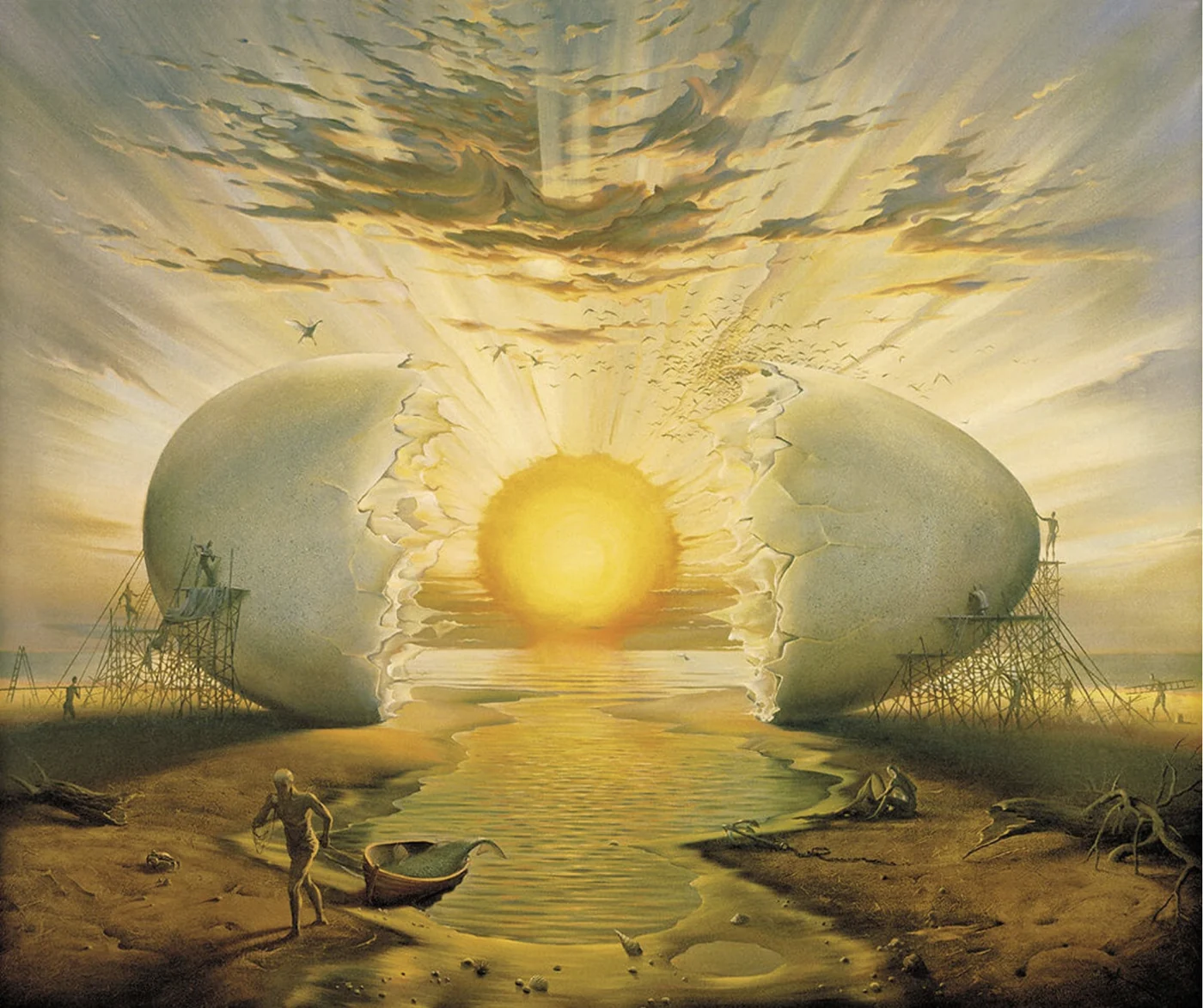
We must Crack our Minds open and view our existence with a multidimensional perspective. Now is a time more than ever in human existence where we learn from what the limited perspectives of our past have brought upon our world. Throughout history, those who ventured beyond our limited world view and into the vast expanse of the infinite could not speak of the wisdom they retrieved. This was viewed as spiritual mysticism, a science on its own of the non-physical world. Yet the division within humanity persists as science is viewed in terms of something tangible and physical, discounting any intangible non-physical reality.
Take note of an excerpt from a scientific mind who is unified with the science of the mystical world.
Physicist and philosopher Fritjof Capra said, “Science does not need mysticism and mysticism does not need science; but humanity needs both.” It is essential that both come from positions of credible compassion, of a common humility focused on uniting the global societies.
The greatest scientific minds of our time have not negated the existence of spirit. To the contrary, those who spend a lifetime unraveling the mystery of life know firsthand the human need for the spiritual. They understand this perhaps better than those who spend a lifetime seeking to exist within the light of spirit.
Humanity can little afford another century of exile—the consequences of decisions made in a forced separation of science and spirit grow potentially more dire with each passing moment. We simply must understand this, and we must use our scientific tools and spiritual gifts to unite the legions of the status quo—for the good of all life on this planet.~ David Morehouse, Ph.D (aka, The Psychic Warrior), former CIA operative at the Stargate Program
The call to unite science and spirituality is not without precedent. Throughout history, some of the most influential scientific minds have ventured beyond the boundaries of conventional materialism, recognizing that the mysteries of existence may extend far beyond what can be measured and observed. Their explorations often brought them into philosophical territory long explored by the mystical traditions of the East, where consciousness, energy, and the interconnected nature of existence have been central to understanding reality.
Erwin Schrödinger, the father of wave mechanics, explored the profound nature of consciousness and its relationship to existence. Deeply influenced by Vedantic philosophy, he came to embrace the idea that consciousness is singular and universal, and that our perception of separate individual selves may obscure a much deeper unity.
Werner Heisenberg, another pioneer of quantum mechanics, also found philosophical parallels between modern physics and ancient Eastern wisdom. In 1929, during a visit to India, Heisenberg met the celebrated Indian poet and philosopher Rabindranath Tagore. Their discussions touched on science and Indian philosophy, opening a fascinating dialogue between two seemingly different ways of understanding reality.
A saying widely attributed to Heisenberg captures this connection: “Quantum theory will not look ridiculous to people who have read Vedanta.” The sentiment reflects the remarkable philosophical parallels between quantum theory and the ancient Vedantic understanding of reality, particularly in their challenges to conventional assumptions about separateness, observation, and the nature of existence.
Decades later, Heisenberg recounted the significance of this encounter to physicist Fritjof Capra, who documented it in his book Uncommon Wisdom. Recalling their discussions, Heisenberg reflected:
“After these conversations with Tagore, some of the ideas that had seemed so crazy suddenly made much more sense. That was a great help for me.”~ Werner Heisenberg, as recounted to Fritjof Capra in Uncommon Wisdom
This is a particularly striking example of how the exploration of seemingly disparate disciplines can illuminate ideas that might otherwise remain difficult to comprehend. It demonstrates the value of approaching the mysteries of existence with an open mind, allowing scientific inquiry and ancient philosophical wisdom to inform and enrich one another.
Max Planck, the originator of quantum theory, expressed an equally profound philosophical perspective when he stated in a 1931 interview:
“I regard consciousness as fundamental. I regard matter as derivative from consciousness.”~ Max Planck, 1931 interview
Therefore the pursuit of scientific knowledge need not be confined to the physical dimensions of existence. The questions raised by science can lead us toward some of the same profound mysteries that mysticism has contemplated for millennia. This does not mean that science has proven every spiritual teaching, but that our understanding of reality may benefit from remaining open to perspectives that extend beyond the limitations of any single discipline.
If we begin to appreciate that we are part of an interconnected whole, then our understanding of life, our relationship with one another, and our responsibility toward the world around us must also evolve. Science and spirituality need not compete for an explanation of existence. They can offer different perspectives through which we deepen our understanding of the same extraordinary reality.
Perhaps the next great evolution of humanity will not be defined by how much more we discover about the universe, but by how deeply we come to understand our place within it.