
The Key to Your Heart Is Surrender
By Avo Garboushian ·
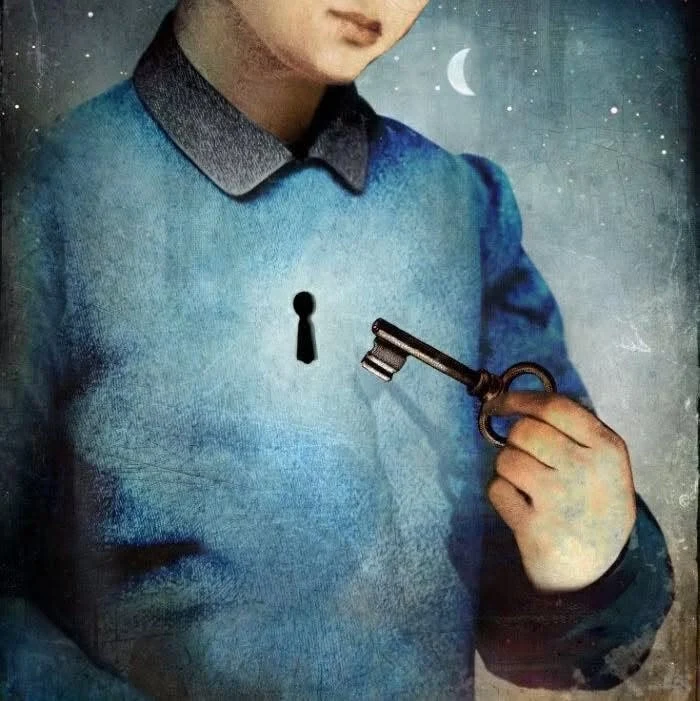
But what does it truly mean to surrender?
It is not an act of weakness, nor is it an abandonment of our will, our convictions or our responsibility to life. It is the willingness to release the attachments, expectations and need for control that so often govern our thoughts and shape our perception of who we are. It is learning to quiet the demands of the mind and listen to something deeper, something that has always been within us, waiting to be heard.
To surrender to the heart is to begin a journey towards the soul.
When I surrendered to my heart, I encountered something that transformed my understanding of myself and of life itself. Beneath the layers of identity, expectation, fear and conditioning, I discovered something profound: the true nature of the soul is unconditional love. Not a love that depends on circumstances, recognition or reciprocity, but a love that exists without conditions, without judgement and without the need to possess or control.
It is a love that does not seek to make us feel special, but invites us to recognise the beauty and dignity in all that lives.
Perhaps Rumi captured this beautifully when he wrote:
“Where can you live safely then? In surrender.”~ Rumi, Talking Through the Door
The ego seeks safety in what it knows. It builds its identity around the familiar, finding comfort in control, recognition and the perception of its own importance. Yet the heart invites us into a different kind of freedom, one that cannot be found by holding on, but only by allowing ourselves to let go.
Yet this discovery is not always comfortable. In fact, surrendering to the wisdom within our heart can initially be one of the most difficult experiences we encounter, because love has a way of revealing what we have spent much of our lives avoiding. It illuminates our insecurities, our pride, our fears and the subtle ways in which the ego seeks to protect its identity and preserve its sense of importance.
Perhaps this is the paradox of love: to experience it fully, we must surrender the very things within us that prevent it from finding expression.
“The nature of love is to surrender.”~ Hazrat Inayat Khan, The Sufi Message
The ego fears losing control. It fears becoming less significant, less special, and ultimately losing the identity it has come to believe is who we are. And so it resists. It struggles against the very thing that could set it free.
Even Jesus, in the Garden of Gethsemane, expressed the profound struggle of surrender in the face of uncertainty and suffering:
“Not my will but yours be done.”~ Jesus, Luke 22:42
These words reveal something essential about surrender. It is not the absence of struggle, nor does it require us to deny our human emotions. It is the willingness to move beyond the limitations of our personal will and place our trust in something greater than the self we have come to identify with.
This is why the awakening of unconditional love can sometimes bring discomfort and even pain. Not because love wishes us to suffer, but because its light reveals the places within us that have yet to heal and mature. It asks us to look honestly at ourselves, including the parts we would rather not see. And that honesty can be difficult. But it is also where transformation begins.
Rumi offers another beautiful perspective on this through his poem, The Guest House, in which he invites us to welcome every experience that enters our lives:
“Welcome and entertain them all!”~ Rumi, The Guest House
He reminds us that even sorrow, shame, fear and difficulty can become unexpected teachers. Rather than resisting what arises within us, we can learn to welcome these experiences with awareness and allow them to reveal what needs our attention. What we once regarded as an obstacle to our happiness can become an invitation to greater understanding.
The purpose is not to destroy the ego, but to bring it into awareness and allow it to mature. Love becomes its greatest teacher, nourishing what is worthy of growth while gently exposing what needs to change. Gradually, the ego learns that it does not need to dominate, compete or constantly defend its identity. It can find its rightful place, not as the master of our existence, but as an instrument guided by the heart and the deeper wisdom of the soul.
This understanding also finds an interesting parallel in the psychology of Carl Jung. His exploration of the relationship between the ego and the deeper Self suggests that our conscious identity is only one part of a much greater psychological reality. The journey towards wholeness requires us to recognise the limitations of the ego and become receptive to the deeper dimensions of our being. In this sense, surrender is not the loss of ourselves, but the discovery that we are far more than the identity we have constructed.
As we learn to listen, something beautiful begins to unfold. Our understanding of ourselves expands beyond the boundaries of our former identity. Insights emerge that are difficult to capture in words, yet profoundly change how we perceive life, our relationships and our place in the world. We begin to recognise not only who we truly are, but also what we are here to express, create and contribute.
Our aspirations begin to change. The desire to prove ourselves gives way to the desire to become. The need for recognition gradually gives way to a deeper fulfilment found in meaningful expression, genuine connection and service to something greater than ourselves.
The Buddha expressed another dimension of this freedom in the Dhammapada:
“Release your past. Release your future. Release your present.”~ The Buddha, Dhammapada 348
There is a profound freedom in releasing our attachment to what has been, what might be and even what we believe must be. When we are no longer prisoners of our past or preoccupied with securing our future, we become more present to the life unfolding before us. We begin to meet each moment with greater clarity, rather than through the expectations and fears we carry from yesterday.
Perhaps this is why Babaji reminds us that when character is lost, everything is lost. Wealth can be accumulated, and health can sometimes be restored, but character is the expression of who we have become through the choices we make and the values we embody. It is revealed in how we treat others, how we respond to adversity, how honestly we look at ourselves and whether our actions reflect the love we profess to understand.
Surrendering to the heart is therefore not an escape from the responsibilities of life. It is an invitation to embrace them more fully, with greater awareness, humility, compassion and integrity. It builds character, deepens our capacity to love and inspires us to become a more meaningful presence in the lives of others.
And perhaps this is the greatest gift of surrender: we stop trying so hard to become someone special and begin discovering the extraordinary beauty of simply being who we truly are.
The heart does not ask us to become less. It invites us to become more of what we were always meant to be.
The key to your heart is surrender.
Surrender to Love