
The Spirit of Open Inquiry
By Avo Garboushian ·

Photo: Peter Menzel / Science Photo Library
When we gather to discuss our different views and findings, we can follow that spirit of open inquiry: ask questions, listen patiently, and recognize that none of us has all the answers. We may not reach a resolution, but we can leave as friends, having expanded our perspectives alongside fellow human beings who are also seeking clarity. As Walter Gilbert reminds us, knowledge develops through the encounter between viewpoints, and our awareness grows when we remain open to what others may help us see.
“The community as a whole doesn’t listen patiently to critics who adopt alternative viewpoints, although the great lesson of history is that knowledge develops through the conflict of viewpoints, that if you have simply a consensus view, it generally stultifies, it fails to see the problems of that consensus; and it depends on the existence of critics to break up that iceberg and to permit knowledge to develop.”~ Nobel Prize winner for Chemistry, Walter Gilbert
There is an important distinction between arguing to defend a position and engaging in a genuine discussion with a spirit of inquiry. When our focus is on being right, we can become attached to defending our convictions, even when there may be more to understand. But when our intention is to explore an idea together, our attention shifts towards finding the right answer and moving towards a meaningful resolution, regardless of whose initial understanding proves correct. This requires us to look beyond our own assumptions, question even widely accepted consensus views, and remain open to the possibility that another perspective may reveal something we have overlooked.
Each of us navigates the world through the lens of our own experiences, knowledge, observations, and the information we have encountered. These shape the way we interpret reality, identify challenges, and determine the paths we believe will lead to a solution. When we bring these different perspectives together and examine the possibilities with an open and systematic approach, we can begin to recognize the blind spots, assumptions, and mental roadblocks that may be limiting our understanding.
Imagine trying to navigate a car equipped with four steering wheels, each being controlled by someone determined to steer in their own direction. No matter how convinced each person is that they know the best way forward, the car would struggle to reach its destination. The same is true of our conversations. When everyone is competing for control rather than working together, progress becomes difficult. But when we learn to listen, share our insights, and align our efforts towards a common destination, we can draw upon the collective wisdom of everyone involved to find a clearer path forward. That willingness to look beyond ourselves, examine what we might be missing, and navigate our differences together is an expression of intellectual maturity.
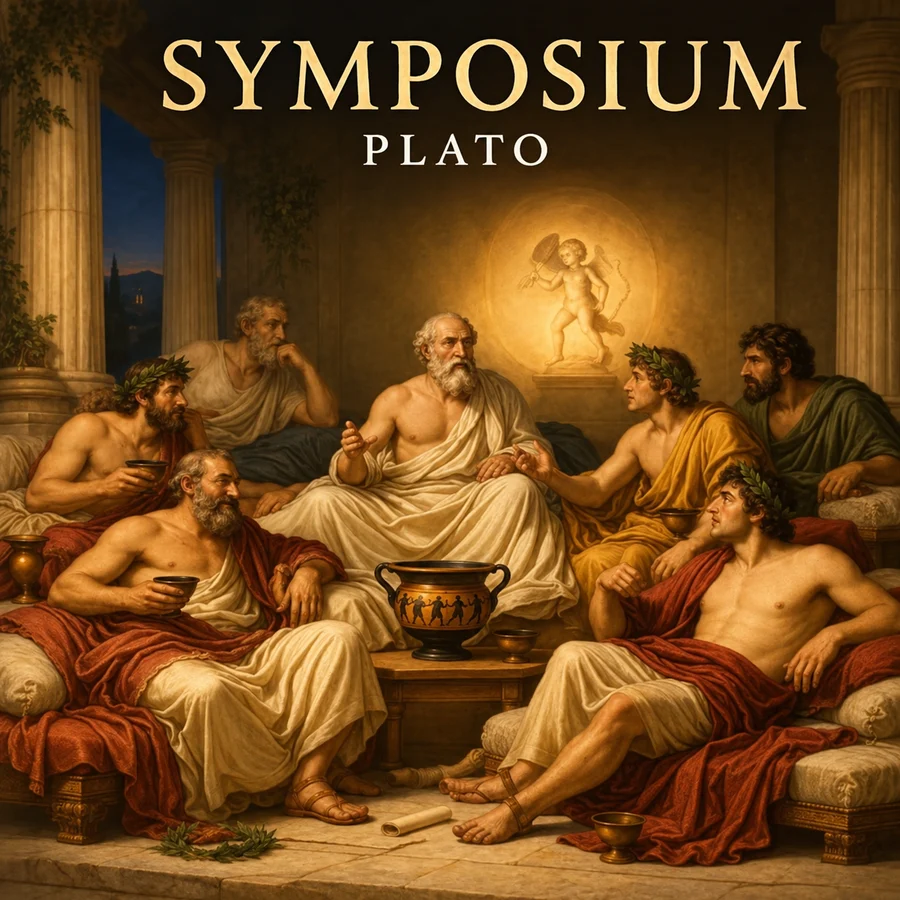
Plato’s Symposium offers a fitting companion to Gilbert’s words: a gathering where companions bring different perspectives to a shared conversation about love. Their exchange reminds us that an open mind makes room for views beyond our own, while an open heart helps us stay connected even when we leave without agreement. That is how we continue the dialogue of life: learning to see through one another’s eyes, cultivating enduring relationships where differences need not lead to discord, and remembering that we are here to love one another across our differences.
We can keep seeking clarity together, trusting that every honest conversation can bring us closer to understanding ourselves and each other.