
Your Words Are Never Neutral
By Avo Garboushian ·
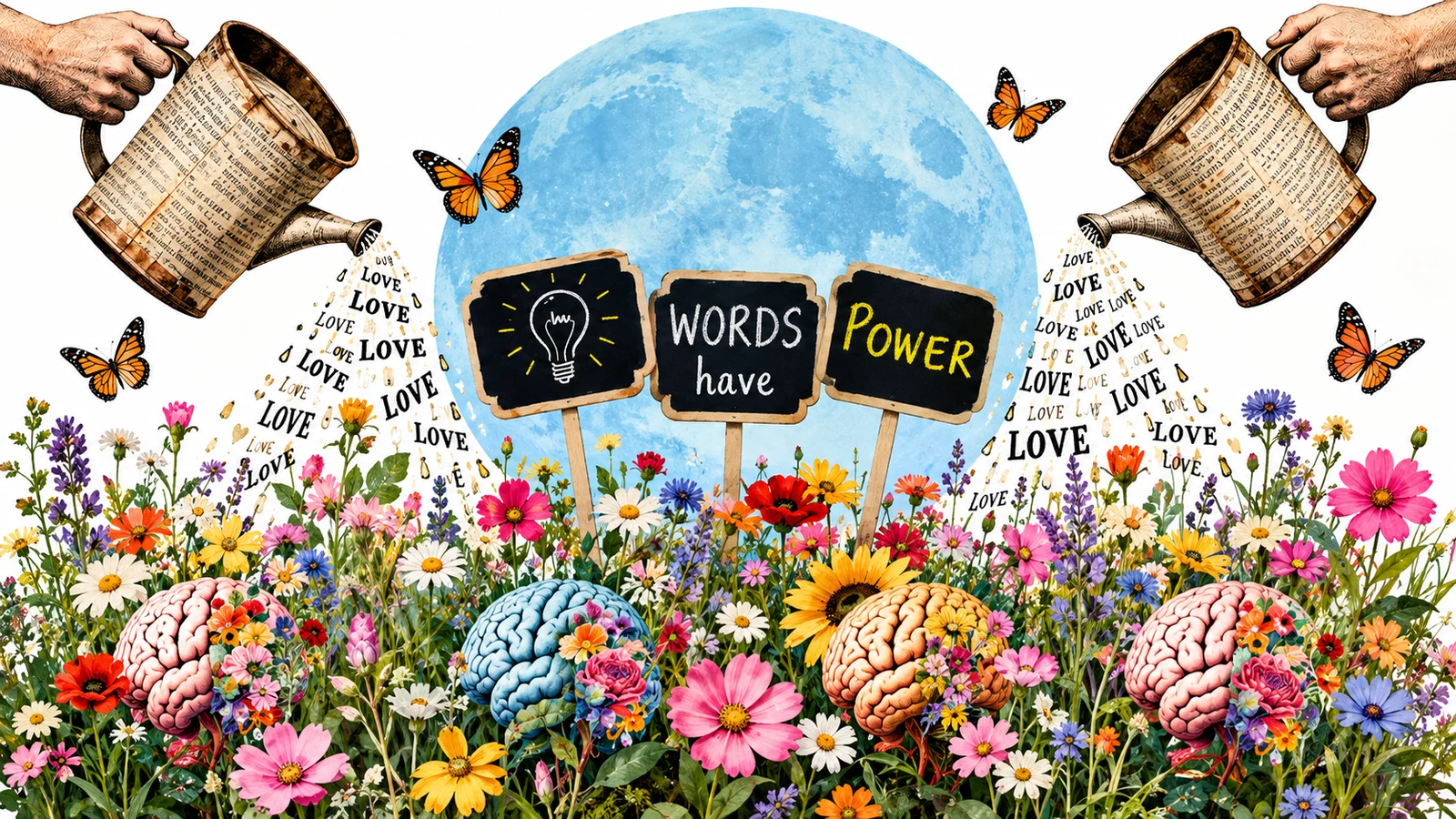
Every tradition on earth has noticed the same quiet fact: a word is never just a sound. It leaves the body carrying a state of mind, and it lands in another body, or back in our own, carrying that state with it.
“Death and life are in the power of the tongue.”
Proverbs 18:21
The Christian scriptures say life and death are in the power of the tongue. The Sufi teacher Hazrat Inayat Khan taught that the word is breath given form, acting on the speaker as much as on the listener. The yogic tradition built whole practices around speech. And modern biology is now asking its own careful questions about how what we believe, feel and say shapes the body that carries us.
This short essay follows the path a word travels, from the first sensation to the final sentence, and asks what it would mean to speak with that path in mind.
The Journey of a Word
A word does not begin as a word. It begins as a sensation: a sound, a face, a touch, a silence, a smell that reminds us of something. Our senses are constantly gathering the world.
Then comes interpretation. The mind asks what this means, and answers from memory, culture, fear and hope. The same tone of voice is an insult to one person and a caress to another. Two people can stand in the same room and live in two different worlds.
Interpretation stirs emotion. Meaning that feels like danger brings tension. Meaning that feels like love brings softness. The body responds before we have had time to decide anything.
Emotion colours thought, and thought gathers into language. This is the moment most of us miss. A word is a thought made audible. When we speak, we give our inner weather a voice, and that voice then becomes a sense for somebody else. Their body hears it, interprets it, feels it, and the chain begins again.
Seen this way, speech is not a small thing. It is the place where one person’s inner world becomes part of another’s.
What the Traditions Have Always Known
The ancient teachings arrived at the same place by different roads.
In the Christian scriptures, the book of Proverbs says that death and life are in the power of the tongue. It does not say the tongue is dangerous. It says the tongue is powerful, and power asks for care.
In the Islamic tradition, a saying of the Prophet Muhammad, peace be upon him, invites the believer to speak what is good or else remain silent. Speech is treated as a trust, something we will be asked about.
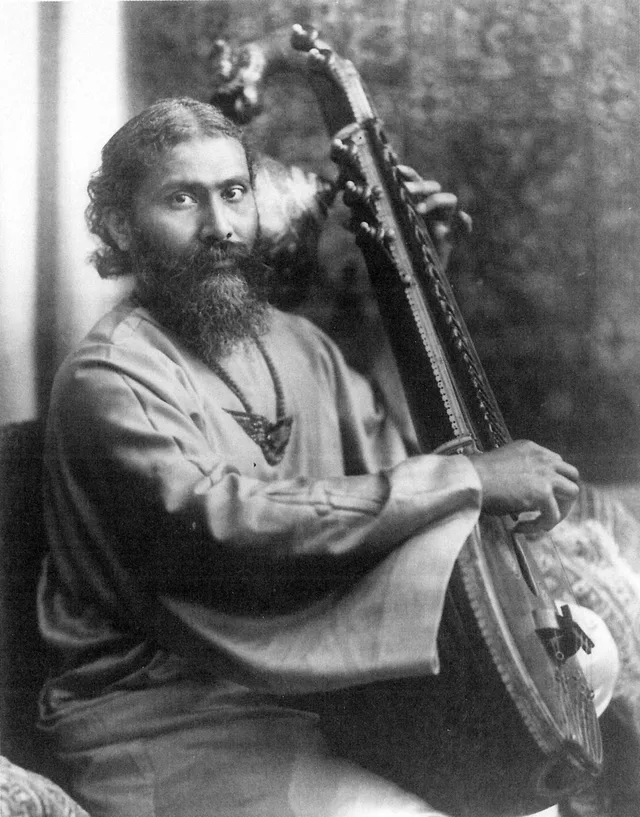
In the Sufi path, Hazrat Inayat Khan taught that the word is not only sound but breath carrying the quality of the heart behind it. For him, the value of speech came from sincerity and from the person speaking. Quoting an old saying, he reminded his listeners that what you are speaks louder than what you say.
In the yogic tradition, the Bhagavad Gita describes austerity of speech as words that do not agitate, that are truthful, pleasing and beneficial. Yoga also gave the world mantra, the practice of choosing a sound on purpose and letting it shape the mind that repeats it.
Different languages, different altars, one insight: the word is a living force, and the first person it moves is the one who speaks.
The Word as Breath
“The first thing we notice is that breath is audible; it is a word in itself.”
“Every word one says has its effect not only upon one’s body but upon one’s mind and one’s spirit.”
Hazrat Inayat Khan
Sufi teacher, from The Sufi Message of Hazrat Inayat Khan, Vol. 2, The Power of the Word

Life and Death in the Tongue
“Death and life are in the power of the tongue: and they that love it shall eat the fruit thereof.”
King Solomon
Proverbs 18:21
What Science Is Beginning to Say
In recent decades, several well known voices have brought this old wisdom into the language of biology. Dr. Bruce Lipton, in The Biology of Belief, argues that our cells respond to their environment, and that our perceptions and beliefs are part of that environment. Dr. Joe Dispenza teaches that repeated thoughts and the emotions they trigger can become habits of body and mind, and that changing the inner pattern can change how we feel and act. Gregg Braden has spent years bridging ancient wisdom and modern science for a wide audience, including the idea that emotion and intention are not separate from physical life.
What the wider research does support is rich and encouraging. Stress and fear, held for long periods, affect the body. Calm, connection and kindness measurably settle it. And in a well known study, researchers found that simply putting a feeling into words reduces activity in the brain’s alarm centre, the amygdala. Naming an emotion softens it.
None of this promises a cure for anything. It offers something quieter and more useful: evidence that the inner climate we create with our thoughts and words is part of the conditions in which we live.
A Simple Practice, and an Invitation
You do not need to change your beliefs to try this. You only need one breath.
Before you speak, especially when something has stirred you, pause. Notice what you sensed. Notice the meaning your mind gave it. Notice the feeling now in your body. Then ask: is what I am about to say true, is it kind, and is it useful? Choose the word that carries what you most want to plant.
Do this once today. Then once tomorrow. Words chosen with awareness begin to change the speaker first, and then the room, and then the people who live in it.
Whatever your faith, your culture or your doubts, the invitation is the same: let your words be a blessing you give away.